
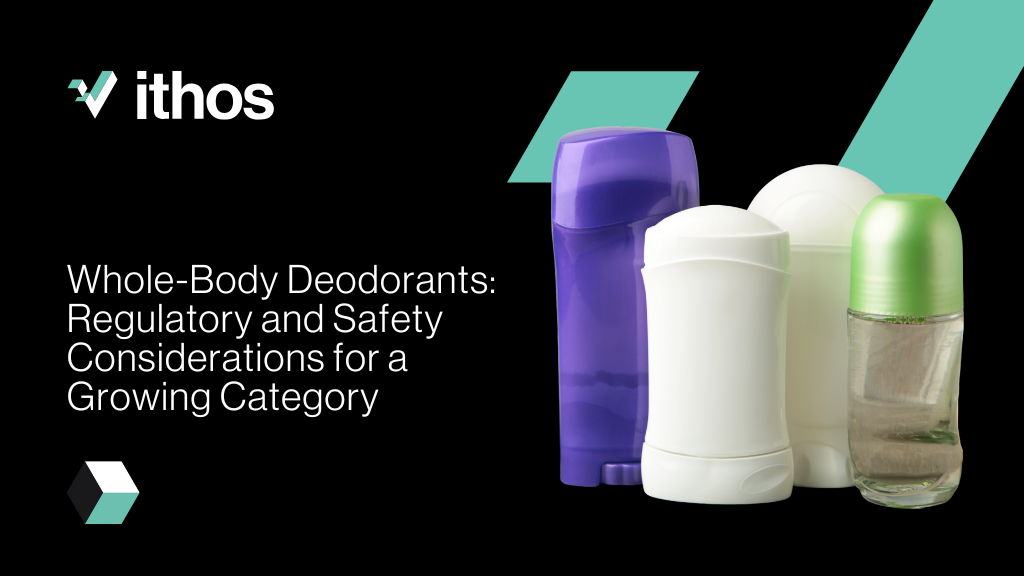
Whole-body deodorants are one of the fastest-growing trends in personal care. As these products move beyond underarms and into broader body applications, brands and consumers are asking important questions. Are whole-body deodorants safe? How are they regulated? And what does compliant product development really require?
This article explains how whole-body deodorants work, how they are regulated in the U.S., and what brands should consider to ensure safety, accuracy, and compliance from formulation through launch, without slowing innovation.
Key Takeaways
What Are Whole-Body Deodorants and How Do They Work?
Whole-body deodorants are cosmetic products designed to control body odor across multiple areas of the body, not just the underarms. They are commonly marketed for use on areas such as the feet, chest, back, and external intimate areas, and are available in formats including sticks, creams, sprays, and roll-ons.
Unlike antiperspirants, deodorants do not reduce sweating. Instead, whole-body deodorants manage odor through several mechanisms:
Because these products are intended for broader use, ingredient selection, formulation design, and testing play a larger role in overall product safety.
Whole-Body Deodorants: Are They Necessary?
Not all sweat produces odor. Strong body odor is primarily associated with apocrine sweat glands, which are concentrated in areas such as the underarms and groin. While people sweat across the body, only certain glands are responsible for odor formation.
As a result, some experts question whether applying deodorant to the entire body is necessary. From a regulatory standpoint, necessity is less relevant than whether products are formulated, tested, and labeled appropriately for their intended use. However, consumer preference, comfort, and lifestyle continue to drive demand in this category.
Are Whole-Body Deodorants Safe? Key Considerations
When properly formulated and used as directed, whole-body deodorants can be safe. Safety depends on ingredient choice, concentration, frequency of use, and the areas of application.
AHAs and Skin Sensitivity
Many whole-body deodorants contain alpha hydroxy acids such as glycolic acid, lactic acid, or mandelic acid. These ingredients help control odor by exfoliating dead skin cells and lowering bacterial growth. However, AHAs may increase skin sensitivity or disrupt the skin barrier in some individuals, particularly with frequent use or application to sensitive areas. Products containing AHAs may require additional safety assessments, consumer guidance, or usage warnings.
External Use Only
Products marketed for use on private areas must clearly state that they are intended for external use only. Internal application can disrupt natural microbial balance and may lead to irritation or infection. Clear labeling and consumer education are essential for these products.
Fragrance-Related Risk
Fragrance ingredients must meet the same safety standards as all cosmetic ingredients. Even so, fragrance remains one of the most common sources of skin irritation or allergic reaction, especially when applied to sensitive or compromised skin. Patch testing should be encouraged, and consumers should be advised to discontinue use if irritation occurs.
How Are Whole-Body Deodorants Regulated in the U.S.?
Cosmetic vs. Drug Classification
In the United States, regulatory classification is determined by product claims:
This distinction is critical. A single claim can change regulatory classification and significantly alter compliance requirements.
Brand and Manufacturer Responsibility
The FDA does not pre-approve cosmetic products or ingredients, aside from certain color additives. This means brands and manufacturers are legally responsible for ensuring that products are safe, properly tested, accurately labeled, and truthfully marketed before they reach the market. For whole-body deodorants, this responsibility increases due to expanded areas of use and potential exposure on sensitive skin.
Testing, Efficacy, and Fragrance Compliance
Whole-body deodorants must be tested on every area of the body they claim to address. Claims must be supported by appropriate data, and testing protocols should reflect real-world use conditions.
Fragrance compliance is another critical requirement. Brands must ensure that fragrances meet International Fragrance Association (IFRA) Standards for each specific application area. A fragrance approved for underarm use may not be approved for use on other parts of the body. Early collaboration with fragrance houses and safety assessors can help prevent reformulation delays and compliance gaps later in development.
Labeling and Marketing Considerations
Clear, accurate labeling is essential for both compliance and consumer safety. Labels and marketing materials should:
All marketing claims across packaging, websites, and social media must align with product classification and supporting data.
Expert Guidance for a Rapidly Growing Category
As demand for whole-body deodorants grows, brands may feel pressure to accelerate development timelines. Skipping safety reviews, shortening testing timelines, or overlooking fragrance restrictions can create regulatory risk and erode consumer trust.
Advice for Brands:
Advice for Consumers
How Ithos Can Help
Developing and launching whole-body deodorants requires careful coordination across formulation, testing, claims, and labeling. Ithos supports brands by actively monitoring evolving cosmetic regulations and screening ingredients and formulations for compliance in the U.S. and globally.
Our Regulatory team helps brands navigate testing requirements, fragrance standards, documentation, and labeling considerations so products can move to market with confidence and credibility.
Our expert advice


Need help understanding these requirements?
Contact Ithos today have our regulatory team help in your next review!
References
Cosmetics & Toiletries: Making Heads or Tails of the Thriving All-Body Deodorant Market